
No products in the cart.
Return To Shop




ACL Knee Brace
£15.49
- Designed for adults with ACL injuries and unstable knees
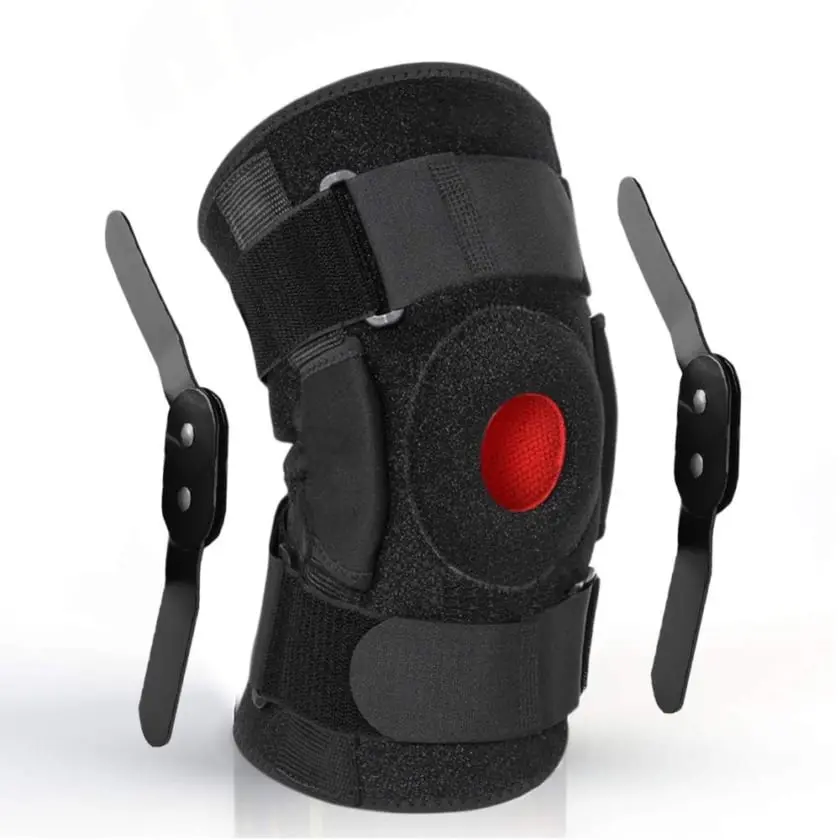
Built for adult knees that feel painful, loose, or prone to giving way after ACL tears, reconstructions, or longer‑standing ligament laxity. Suitable for either the left or right knee. - Dual metal side hinges for guided stability
Free‑moving hinges on the inner and outer sides of the knee allow normal bending and straightening but resist the extra forward slide and inward/outward drift that strain weakened ligaments. This helps the joint feel more secure during walking, stairs, turning, and longer periods on your feet. - Open‑patella silicone ring to support the kneecap
An open‑patella ring around the kneecap supports its position and spreads pressure across the front of the joint, which can ease sharp front‑of‑knee pain linked to problems such as patellar tendonitis, chondromalacia, and patellofemoral pain. - Adjustable straps and silicone anti‑slip grips to keep it in place
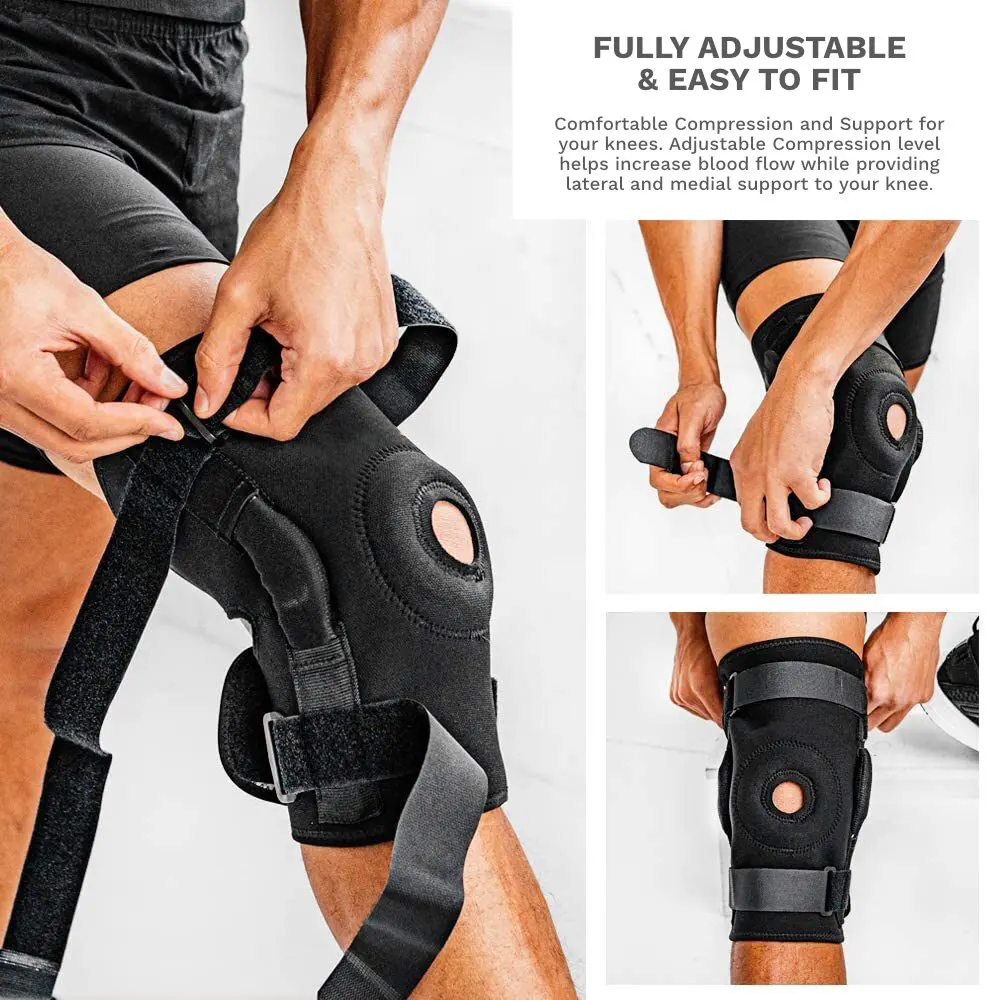
Two straps above and below the knee let you set firm but comfortable compression, while internal silicone strips at the top and bottom edges help prevent the brace sliding down or rolling, even during longer walks or busier days at work. - Targeted compression to reduce swelling and improve joint awareness
Even pressure around the knee can help limit swelling, provide a supported feel, and improve awareness of how the joint is moving, which may reduce sudden, off‑balance steps that aggravate symptoms. - Breathable, low‑profile design for everyday wear
Made from durable, breathable, moisture‑wicking fabric shaped to adult thighs and calves, with padding at the front and shaping behind the knee to reduce rubbing and bunching. Slim enough to wear under looser trousers or joggers, or over a thin knee sleeve if you prefer. - Removable hinges for different levels of support
Use the brace with hinges in place for firmer, guided support during higher‑demand tasks—such as sport, rehabilitation sessions, longer walks, or busy work days—or remove the hinges when you only need lighter compression and patella support. - Developed with physiotherapy input and supported by a 30‑day guarantee
The main features of the brace have been designed with input from physiotherapists experienced in ACL and knee‑instability care. A 30‑day satisfaction guarantee allows you to try it in your own day‑to‑day life and return it for a refund if it is not right for you, in line with our returns policy.
RevitaFit Hinged ACL Knee Brace for Adults
Steady, Controlled Support for Painful, Unstable, or ACL‑Injured Knees
When an ACL injury or ligament weakness leaves your knee feeling unreliable, even simple movements can start to feel risky—especially on stairs, slopes, or uneven ground. The RevitaFit Hinged ACL Knee Brace is built for adult knees to give firm, controlled support after ACL tears, reconstructions, and long‑standing instability. Dual metal hinges, an open‑patella support ring, and a close, contoured fit work together to help keep the joint steady during walking, work, and carefully managed sport.
ACL injuries and ligament‑related knee instability can turn everyday movements—walking downstairs, changing direction, standing for longer spells—into sharp, shaky, or unsteady moments. In these situations, a hinged ACL brace is appropriate because it limits how far the knee can move in the directions that strain damaged ligaments, and it takes on part of the job those tissues are currently struggling to do. Instead of leaving a weakened ACL or collateral ligament to manage every slide, twist, and sideways movement alone, the brace adds firm support from the outside.
The RevitaFit Hinged ACL Knee Brace is designed to provide targeted stability around the ACL and supporting ligaments, while staying comfortable enough for regular daytime wear at home, at work, and during planned activity. With the brace on, the shinbone has less room to slip forwards under the thighbone or let the knee drift inwards or outwards, and the kneecap is held more centrally at the front of the joint. That means the knee is less likely to jolt or buckle in the positions that currently feel most vulnerable.
The same brace can be worn on either the left or right knee; there is no separate left‑ or right‑sided version to choose from. If your main worries are the knee giving way on stairs, feeling loose when you turn, or aching and swelling after longer periods on your feet, this is the kind of external support that can change how those movements load the joint. It does not repair torn tissue, but it reduces the excess slide, twist, and sideways drift that keep provoking symptoms, so you can move with more confidence while you work on strength and rehabilitation.
Understanding ACL Injuries and Knee Instability
Where the ACL Sits and Why It Matters
The anterior cruciate ligament (ACL) is one of the key bands of tissue inside the knee that help keep it under control. It sits deep in the centre of the joint, running from the back of the thighbone to the front of the shinbone, and crosses over the posterior cruciate ligament (PCL)—which is why they are called the “cruciate” ligaments. Together, they act as a central restraint, limiting how far the shinbone can slide forwards or backwards and how much the joint can twist when you put weight through it.
The ACL is especially important when the knee is bent and loaded—walking downstairs, stepping off a kerb, changing direction, or landing from a step. In these positions, the shinbone naturally wants to move slightly forwards and rotate. A healthy ACL checks that extra forward slide and twist, and it also sends constant feedback to the nervous system about where the knee is in space. When the ACL is overstretched or torn, that control is reduced: the shinbone can move further forwards and twist more than it should, and the joint can suddenly feel as if it is not fully under your command.
That loss of automatic control is often what people notice first.
Who Tends to Injure the ACL – Is It Only Athletes?
A noticeable number of ACL tears do occur in sport—especially activities that involve sudden stops, quick changes of direction, jumping and landing, or twisting on a planted foot. Those who play football, rugby, netball, basketball, or who ski or take part in other stop‑start, pivoting sports are therefore at higher risk.
However, ACL problems are not limited to athletes. Many people sustain an ACL injury in everyday situations: slipping on a wet surface, missing a step on the stairs, twisting awkwardly with the foot fixed on the ground, or having the knee forced inwards or outwards during a fall. Others develop long‑standing ACL deficiency after an older injury that was never fully rehabilitated, or in the context of generally looser ligaments.
Factors that can increase the likelihood of ACL injury or ongoing instability include:
- A previous knee injury that stretched or partially tore the ligament.
- Reduced strength or control in the muscles around the hip and thigh.
- Repeated twisting or pivoting demands without enough recovery.
- Naturally more flexible or lax connective tissues.
So while sport is a common setting, any adult who has had a significant twist, awkward landing, or direct blow to the knee, followed by swelling and a loss of trust in the joint, may be dealing with an ACL injury or its longer‑term consequences.
How an ACL Injury Feels Day to Day
At the time of injury, many people describe a sharp “pop” or tearing sensation, followed by rapid swelling and a clear sense that the knee cannot be trusted. In the days and weeks afterwards, the most common feelings are that the joint is loose, may suddenly give way, or is awkward to load in certain positions.
Walking downstairs, stepping off a kerb, or turning to change direction can suddenly feel unstable, as if the knee might buckle underneath you. Quick pivots, such as turning to the side or twisting on one leg, can bring a sudden twinge or a real “giving way” moment that makes you wary of repeating the movement. Even getting up from a chair after sitting for a while can feel stiff or uncertain, because the joint and surrounding muscles are trying to protect the injured area and are not yet working smoothly together.
Not everyone has a single dramatic injury. Some people notice a pattern over months or years: repeated minor twists, “near‑miss” giving‑way episodes, or a gradual sense that one knee is looser and more tiring to use than the other, especially on uneven ground. In both the sudden and slower‑build scenarios, the underlying problem is similar: the ligaments are not providing their usual level of restraint, so the joint moves more than it should under load.
Why Untreated Instability Causes Knock‑On Problems
If the ACL and other supporting structures are left to cope without enough help, the knee can move in small, unhelpful ways with each step. That extra movement can:
- Irritate the meniscus (the wedge‑shaped shock‑absorbing cartilage).
- Strain the collateral ligaments on the inner and outer sides of the knee.
- Increase pressure on specific areas of the joint surfaces.
Over time, repeated irritation can contribute to aching, swelling after activity, and gradual wear in the cartilage between the bones. People often notice that, by later in the day or after a busier spell on their feet, the knee feels more swollen, more achy around the front or sides, and closer to “giving out” on rough or uneven ground.
Instability is not always caused by a brand‑new tear. It can be left over from older injuries that never fully settled, repeated minor sprains, or an ACL reconstruction that still needs support while strength and control are rebuilt. In all of these situations, the knee is being asked to manage turning, stepping, and weight‑bearing without its usual level of built‑in control from the ligaments. That is why movements such as stairs, slopes, quick changes of direction, or longer walks can feel particularly difficult or draining without the right support.
Why Your Knee Keeps Flaring Up During Everyday Tasks
For many people with an ACL injury or general knee looseness, pain and “giving way” tend to appear in familiar situations rather than at random. Typical flare‑up moments include:
- Walking downstairs or down slopes.
- Turning or pivoting on one leg.
- Standing up after sitting for a while.
- Longer walks on firm, unforgiving surfaces.
- Prolonged standing, especially later in the day.
Walking downstairs is one of the common triggers. Each step down puts your body weight over a bent knee. The shinbone naturally wants to move slightly forwards, and the knee can drift a little inwards or outwards. When the ACL and other ligaments are already weakened, that extra slide and drift are not held as firmly, so the joint can feel sharp, shaky, or as if it might buckle.
Similar problems show up when you change direction quickly, such as turning to the side or pivoting on one leg. These movements ask the ACL, the collateral ligaments, and the meniscus to control rotation and sideways movement at the same time. If those structures are not providing full support, a quick turn can lead to a sudden twinge or a “giving way” feeling that makes you cautious and less willing to trust the leg.
Getting up from a chair after sitting for a while often brings a different sensation. With the knee bent and still, fluid can settle in the joint and the muscles around it can switch off slightly. When you first stand and load the leg again, the knee may feel stiff, tight, or briefly unsteady until everything starts working together. If there is any swelling, that start‑up phase can be particularly uncomfortable.
Longer walks on hard surfaces and prolonged standing tend to cause a slower‑building ache. With each step or minute on your feet, small extra movements in an unstable knee add up. The thighbone and shinbone may not glide as smoothly over the meniscus and cartilage, and the muscles have to work harder to stop the joint drifting. By later in the day, many people notice aching around the front or sides of the knee and a stronger sense that the joint is close to giving out on uneven ground.
If there is also early arthritis or cartilage thinning, the same tasks can be even more demanding. Less cushioning inside the joint means more pressure on exposed areas when you stand, walk, or go down steps. Combined with ligaments that are not holding the joint as firmly as they once did, this explains why familiar movements like stairs, slopes, and longer periods on your feet keep provoking the knee unless the way those forces are handled is changed.
A hinged ACL brace does not replace assessment, diagnosis, or rehabilitation. But for adults whose symptoms match these patterns—giving way, sharp twinges on stairs or turns, and slow‑building ache and swelling after busy days—it can add the firm, external guidance that the injured ligament is no longer providing by itself, so the joint is better controlled during the movements that challenge it most.
How the RevitaFit Hinged ACL Knee Brace Helps
The RevitaFit Hinged ACL Knee Brace is built to change how your knee behaves during the movements that currently feel most risky: walking downstairs, getting up from a chair, turning, and spending longer periods on your feet. When ligaments such as the ACL, MCL, or LCL are not giving full control, the shinbone can move a little too far forwards under the thighbone, the joint can drift inwards or outwards, and the knee can twist more than it should when you load it. Those extra movements are often what create the sharp twinges on stairs, the sudden “giving way” on uneven ground, and the slow‑building ache after a day on your feet.
The brace is designed to reduce those patterns. Metal side hinges run along the inner and outer edges of the joint to give firm guidance as the knee bends and straightens, while remaining free‑moving so they do not lock or set a fixed limit on how far you can bend. An open‑patella silicone ring around the kneecap supports its position and helps spread pressure at the front of the joint. A contoured fabric body, two adjustable straps, and internal silicone grip strips keep the whole brace in place so the support stays where it is needed.
With the brace correctly fitted, the shinbone has less scope to slide forwards or shift sideways under load, and the kneecap is held more centrally as it glides. The result is that the knee moves in a more controlled way when you bend and straighten, so the ligaments, meniscus, cartilage, and tendons are not exposed to as many sudden jolts or awkward angles. The free‑moving hinges allow you to bend the knee for normal walking, sitting, and everyday tasks, while still resisting the excess movements that strain injured or lax tissues.
The brace has been developed with input from physiotherapists experienced in treating ACL injuries and knee instability, so its main features are aligned with the way clinicians routinely manage these problems in adults. For many people with ACL tears, reconstructions, or long‑standing instability, that means walking, using stairs, standing for work, and returning to lighter activity feel less unpredictable. The brace does not replace rehabilitation or medical care, and it does not repair damaged tissue, but it provides a reliable layer of external stability while you rebuild strength and control from the inside.
Side Hinges to Steady Forward and Sideways Movement
Along the inner and outer sides of the knee, the RevitaFit brace contains two metal hinges, aligned with the joint so they bend and straighten with it. These hinges act as firm guides. They allow you to flex and extend the knee through its normal range of motion, but they resist the extra forward and sideways shifts that are difficult for weakened ligaments to control on their own.
When your body weight moves over a bent knee—such as when you go downstairs or step off a small drop—the shinbone naturally wants to glide slightly forwards on the thighbone. In a healthy knee, the ACL checks that movement. When the ACL is torn, reconstructed, or generally weakened, that forward glide can go a little further and a little faster, which is often felt as a sharp jolt or a sense that the knee might give way. With the RevitaFit brace on, the side hinges limit that extra forward movement, so the shinbone is held more firmly under the thighbone and each step down places less sudden pull on a compromised ACL.
The same hinges and side panels also provide firm support against the knee drifting inwards or outwards, which is what strains the inner (MCL) and outer (LCL) collateral ligaments. When you turn, change direction, or take weight on one leg, these ligaments are asked to prevent the knee dipping sideways under load. If they are sprained, stretched, or already under strain because the ACL is not fully doing its job, that sideways give can feel like a wobble or a brief loss of control. By limiting how far the joint can tilt inwards or outwards in these situations, the hinges take on part of that role and many adults notice a steadier, more predictable feeling on uneven ground and in single‑leg positions.
Because the hinges are fixed into a brace that grips both the thigh and the upper shin, they do not simply rest on the skin—they link the bones above and below the knee. When your foot lands and the joint bends slightly, some of the load that would otherwise be held entirely by stretched or healing ligaments is carried through the rigid side frames. This reduces repeated stress on those ligaments and can help cut down the small, uncontrolled movements that have been aggravating the joint with each step.
The hinges do not lock and do not set a hard stop on how far you can bend the knee. Their role is to guide the joint and resist excess sideways and forward–backward movement, rather than to act as rigid splints. That makes them suitable for everyday walking, standing, and controlled exercise, while still providing a clear sense of extra security when you move into positions that normally feel vulnerable.
Patella Pad to Ease Front‑of‑Knee Pain
At the front of the knee, the RevitaFit brace has an open‑patella silicone ring that cradles the kneecap and follows the line of the patellar tendon down towards the top of the shinbone. As you bend under load—whether you are sitting, standing, using stairs, or walking downhill—the kneecap and tendon glide over the front of the joint and take a share of the force. When the cartilage behind the kneecap is softened or worn, or when the tendon is irritated, that force can concentrate on a small sore area and produce sharp pain with each bend.
The patella ring is designed to spread this pressure more evenly. By surrounding the kneecap and covering the line of the tendon, it prevents force from being focused on a single sensitive point and encourages it to be shared across a broader section of tissue. In practice, this can reduce the intensity of sharp, front‑of‑knee pain during loaded bends, such as when you go downstairs, rise from a low chair, or perform a controlled squat, particularly in conditions such as chondromalacia, patellar tendonitis, and patellofemoral pain.
Because the ring sits in close contact with the front of the knee, it also increases awareness of where the kneecap is and how far you are bending. Many adults find that this subtle feedback helps them naturally limit how deep they go into positions that usually provoke symptoms, without having to think about every movement. The result is that everyday tasks which load the front of the knee can become more tolerable, especially when the brace is used alongside an appropriate strengthening and activity‑management plan.
Straps, Fabric, and Anti‑Slip Grips to Keep the Brace in Place
Support only helps if it stays in the right position. Two adjustable straps, one above and one below the knee, allow you to set firm but comfortable pressure around the thigh and upper shin. This helps the brace grip the leg so the hinges stay aligned with the joint as you move. When the hinges are held in the correct position, they can reliably limit the excess forward slide and sideways drift already described, rather than slipping round the leg and losing their effect.
The even pressure from the straps also improves your sense of how the knee is moving. Gentle compression around a joint is known to enhance joint position awareness, which in practical terms means you are more aware of where your leg is and how much weight you are putting through it. That can help you place your foot more safely when stepping, turning, or walking longer distances, and can reduce the number of awkward, off‑balance moments that have been aggravating your symptoms.
Inside the top and bottom edges of the brace sit silicone grip strips. These help the fabric “lock on” to the skin or to a thin base layer, reducing the tendency for the brace to slide down the leg during walking or to roll at the edges. For many adults, this is the difference between a brace that constantly needs pulling up and one that stays in place for the times it is most needed.
The main body of the brace is made from stretchable, breathable fabric shaped to follow the curves of an adult thigh and calf. This close fit keeps the hinges and patella ring in steady contact with the leg, reducing the risk of edges digging in. Moisture‑wicking fibres draw sweat away from the skin during activity, and the shaping behind the knee is designed to fold neatly rather than bunch sharply when you sit and bend the joint repeatedly. These design choices exist to keep the brace in the right place and comfortable enough that you can wear it for the activities where your knee usually feels most vulnerable.
If you prefer, the brace can be worn over a thin, smooth knee sleeve rather than directly on the skin. Many adults find this layering adds extra comfort, particularly if the skin is sensitive, while still allowing the hinges and patella ring to do their work. The profile is slim enough to fit under looser trousers or joggers; if clothing is tight around the knee, it can be worn comfortably over the top instead.
Options for Different Levels of Support
Not every situation calls for the same level of support. The RevitaFit Hinged ACL Knee Brace is designed so that you can adjust how much structured control it provides without changing to a different product.
With the metal hinges in place, the brace offers its firmest level of support. This set‑up is most useful during higher‑demand activities such as sport, rehabilitation sessions, longer walks, or busy days at work when you are on your feet more. In these situations, the ligaments and joint surfaces are repeatedly loaded, and having the side frames in place gives the knee clearer guidance each time you bend and weight‑bear.
The hinges can be removed when you only need lighter support. Without the metal frames, the brace still provides compression, the open‑patella silicone ring around the kneecap, and a general sense of security, but it does not offer the same level of side‑to‑side and forward–backward control. This lighter set‑up can be helpful during times when you are mostly sitting or doing short periods of gentle activity, and you simply want some support and awareness around the joint rather than full guidance of its movement.
Being able to change the level of support in this way makes it easier to match the brace to your day. Many adults choose to use the full hinged set‑up for the parts of the day when their knee is most likely to be tested—stairs, slopes, longer walks, or light sport—and switch to lighter, hinge‑free support when they know the demands on the joint will be lower. In both modes, the straps, contoured shape, and anti‑slip grips work in the same way to keep the brace where it should be, so whichever level of support you select, it can do its job consistently.
Who This Brace Is Designed For
This brace is intended for adults whose knees feel painful, loose, or unreliable because the ligaments and nearby structures are not giving full control. It is not a diagnosis or a stand‑alone treatment, but a mechanical aid for situations where the joint is moving more than it should and needs firmer guidance from the outside. The main groups below cover the patterns of instability and overload that physiotherapists and other clinicians most often see in practice.
If you recognise your situation in one of these descriptions, the condition‑specific sections further down the page can help you understand in more detail how the brace behaves in your particular case.
After ACL Reconstruction (with Clinician Clearance)
After ACL reconstruction, the new graft and surrounding tissues need time to heal and strengthen. In the early and middle stages of rehabilitation, many adults notice stiffness, swelling, and a lack of confidence when they first put weight through the leg. Walking on level ground, using stairs, stepping off a kerb, or starting light exercise can all feel vulnerable, especially when the knee is slightly bent and the graft is under load.
At this point, a sudden forward slide of the shinbone or an unexpected twist at the knee can place extra strain on the healing graft. Because the quadriceps and hamstring muscles are often weaker and slower to react after surgery, they cannot yet support and protect the knee as well as usual. The RevitaFit Hinged ACL Knee Brace is suitable here when your surgeon or physiotherapist has advised that a brace is appropriate. The side hinges and close fit help guide the joint so it cannot move as far or as sharply in the directions that stress the graft most, making early walking, carefully managed stairs, and supervised exercises feel more secure.
For a more detailed look at how the brace supports a post‑operative knee, see the “Post‑surgery rehabilitation (e.g. adult ACL reconstruction)” section in the accordion below.
ACL Tears Managed Without Surgery or Long‑Standing ACL Deficiency
Some adults with ACL tears are managed without surgery, or have an older ACL injury that has left the knee less stable over time. The ligament does not provide its full restraining role, and the knee may give way on uneven ground, when stepping down, or when changing direction. The feeling is often one of sudden loss of control rather than constant pain: a “slip” or “buckling” sensation that makes you wary of trusting that leg, particularly on stairs, slopes, or rougher surfaces.
When an ACL is deficient, each step or pivot can allow the shinbone to move a little too far forwards or twist more than it should. Over time, that extra movement can irritate the meniscus and joint cartilage and place more strain on the collateral ligaments and supporting muscles. In this group, the RevitaFit Hinged ACL Knee Brace adds firm support from the outside so the joint cannot drift as far in these directions. The metal hinges resist excessive forward slide and sideways collapse, while the snug fit helps keep the brace correctly aligned as you move, so everyday activities and moderate sport feel less like they might suddenly catch the knee out.
The “ACL tears managed without surgery or long‑standing ACL deficiency” explanations in the accordion below expand on this in more detail.
Combined Ligament Strain or General Looseness Around the Knee
Some knees are dealing with more than one ligament issue. The inner (MCL) or outer (LCL) ligaments may have been strained alongside the ACL, or the joint may simply be generally loose because the ligaments have more give than usual. In these situations, the knee can have a habit of drifting inwards or outwards when you walk, squat, or stand for longer periods, even if there has not been a single dramatic injury event. Adults often describe this as a “wobbly” or “sloppy” feeling, particularly when stepping off a kerb, turning, or standing on one leg.
When the ligaments are lax or recovering from strain, they do not hold the thighbone and shinbone as firmly under the hip. The result is small side‑to‑side shifts with each step, which ask the meniscus, cartilage, and supporting muscles to do more work to keep the joint centred. Over many repetitions, this can lead to aching, swelling after activity, and a growing lack of confidence in the knee. The RevitaFit Hinged ACL Knee Brace is designed to act as an external check on these movements. The side hinges give extra guidance against inward and outward drift, and the close fit limits forward–backward shifts of the shinbone, helping the leg feel more centred and less prone to sudden wobble.
For a fuller explanation of ligament laxity and combined ligament strain, see the relevant entries in the accordion below.
Mild to Moderate Osteoarthritis with a Feeling of Instability
For many adults with mild to moderate osteoarthritis or cartilage wear, the knee feels both achy and less steady than it once did. As cartilage thins, the thighbone and shinbone do not glide as smoothly over each other, and more force is transferred to the areas where cartilage is worn. If one side of the joint is more affected, the knee can tend to drift inwards or outwards when you stand or walk, placing extra strain on ligaments and nearby soft tissues. Over the course of a day on your feet, this can build into significant discomfort and leave the knee feeling tired and closer to giving way, even if it does not fully collapse.
In this situation, the RevitaFit Hinged ACL Knee Brace offers firm support for joints that feel both painful and slightly unreliable. The hinges on either side of the knee support the joint against collapsing inwards or outwards, so the leg sits in a more neutral position under the hip. This can reduce concentrated loading on the more worn side of the joint and ease the strain on stretched ligaments. For many adults, that means walking, standing, and using stairs feel more controlled and less exhausting, particularly when used alongside exercise, weight management, pain‑relief strategies, and medical care.
The “Knee osteoarthritis and wear‑and‑tear arthritis” entry in the accordion below gives a more detailed picture of how the brace changes load in this condition and where its limits lie.
Other Knee Conditions This Brace May Help With
Although this brace is designed first for ACL injuries and ligament‑related instability in adults, many people have more than one problem in the same knee. Meniscus tears, front‑of‑knee pain, early arthritis, or issues on the outer side of the joint often sit alongside ligament damage. In these situations, the same features that steady an ACL‑compromised knee—guided movement, control against inwards and outwards drift, and more even pressure around the joint—may also help certain other conditions feel easier to manage during everyday tasks.
The condition‑specific sections below explain, in plain language, what tends to go wrong in each problem, how it usually feels in day‑to‑day life, and how the RevitaFit Hinged ACL Knee Brace changes the stress on key structures. They are not a diagnosis and do not replace a consultation with a GP, physiotherapist, or specialist, but they can help you recognise when this type of brace is likely to be a sensible part of your overall care.
If you do not yet have a clear diagnosis, look for the description that most closely matches where your pain sits, which movements tend to set it off, and how the knee feels as the day goes on. That can give you a better starting point for discussing your symptoms and options with a professional.
Comfort, Fit, and Sizing for Adult Legs
A brace can only do its job if it fits well and is comfortable enough to wear at the times your knee needs support most. The RevitaFit Hinged ACL Knee Brace is sized and shaped specifically for adult legs, whether your build is slimmer, more muscular, or fuller around the thigh and calf.
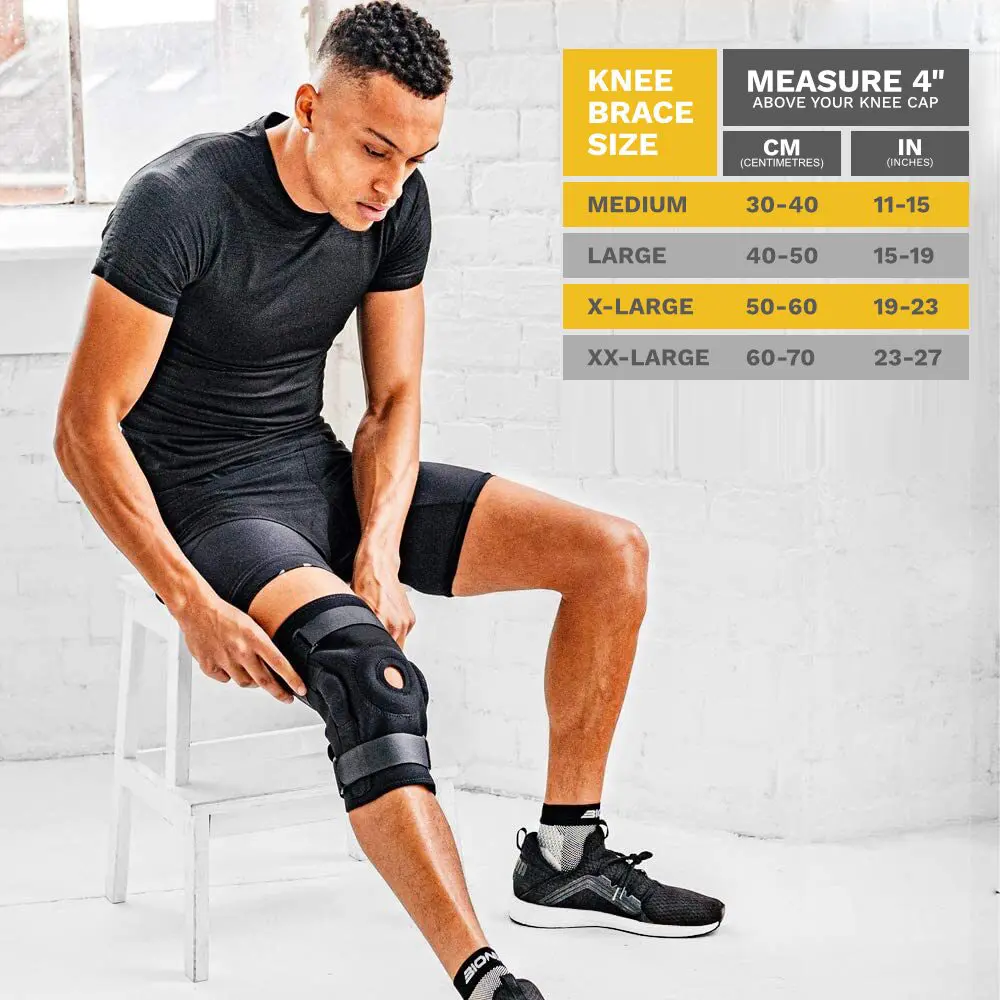
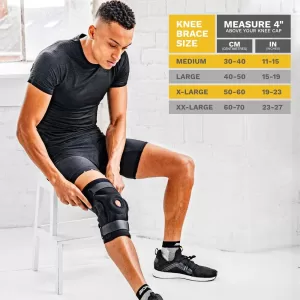
It is available in four sizes based on knee circumference:
- Medium: up to 40 cm
- Large: up to 50 cm
- XL: up to 60 cm
- XXL: up to 70 cm
To choose a size, measure around the centre of your knee with the leg relaxed and slightly bent. If your measurement sits between two sizes, those who prefer a snugger, more supportive feel often choose the smaller size, while those who prioritise ease of application and a bit more room tend to pick the larger. If one knee is slightly swollen compared with the other, base your choice on the larger side so the brace can be applied comfortably.
The contoured shape of the brace follows the natural curves of the thigh above the knee and the upper part of the shin below it. This helps it sit close without digging into the skin, so the metal hinges and open‑patella ring stay correctly positioned as you move. The dual straps above and below the joint allow you to fine‑tune the fit. You can set each strap so the brace feels firm but not restrictive, which is especially useful if your thigh and calf differ in size.
The main body of the brace is made from breathable, moisture‑wicking fabric. This helps keep the skin underneath drier and more comfortable, whether you wear it directly on the leg or over a thin, smooth layer of clothing. The inside surfaces are finished to be as smooth as possible to minimise rubbing, particularly behind the knee where fabric can bunch when you sit or bend. The shaping in this area is intended to fold neatly rather than crease sharply, which can make a noticeable difference during tasks such as driving, working at a desk, or any activity that involves frequent bending and straightening.
Padding around the front of the knee helps soften contact if you bump the joint or kneel briefly, and a fabric blend that retains gentle warmth can be helpful if the knee tends to feel stiff at the start of movement. For many adults, this combination of mild warmth and cushioning makes the joint feel less stiff and less “jarring” during day‑to‑day tasks, without trapping excess heat when they are more active.
For adults who need support through the working day or during longer periods on their feet, these comfort details are important. A brace that constantly slips, pinches, or feels overly hot is unlikely to stay on for the very tasks that aggravate the knee most. By combining a range of adult sizes, a contoured design, adjustable straps, silicone anti‑slip grips, and breathable materials, the RevitaFit Hinged ACL Knee Brace is intended to provide a secure yet comfortable fit. That makes it more realistic to wear the brace during the activities that typically set your symptoms off—such as walking, standing, and using stairs—so you can gain the full benefit of the stability it provides.
Durability and Care
A knee brace is only useful if it keeps its shape, support, and grip over time. The RevitaFit Hinged ACL Knee Brace is built with regular use in mind, using materials and construction chosen to cope with repeated bending, standing, and walking.
The metal side hinges are designed to be both strong and smooth‑moving. They are housed in reinforced channels along the sides of the brace, with stitching and fabric thickness chosen to handle the repeated stresses of everyday wear. The hinges are free‑moving and do not lock; they are there to guide and resist excess movement, not to act as rigid splints, which helps reduce the risk of them catching or digging in as you move.
The main body of the brace is made from a durable, elasticated fabric blend that is intended to hold its shape and support over time rather than stretching out quickly. Areas that take more load, such as the hinge channels and strap anchor points, are finished with extra stitching to reduce fraying or tearing under repeated use. Internal silicone grip strips at the top and bottom edges are bonded securely so they continue to provide anti‑slip support even after multiple wears and washes.
For hygiene, the brace can be hand‑washed in cool water with a mild detergent. It is usually best to remove the metal hinges before washing, so the fabric can be cleaned and dried thoroughly and the hinges are not exposed to unnecessary moisture. After washing, rinse well and allow the brace to air‑dry flat away from direct heat. Avoid tumble‑drying or wringing, as this can damage the elastic fibres and shorten the life of the brace.
How often you wash the brace will depend on how long you wear it each day and how much you perspire. For most adults, a simple pattern—such as a quick hand wash at the end of the day after heavier use, or every few days with lighter wear—is enough to keep it fresh without affecting support. When cared for in this way, the materials are designed to maintain their elasticity, grip, and supportiveness over an extended period of regular use.
How to Use Your Brace in Daily Life and Activity
How and when you wear a hinged brace will affect both comfort and how much support it gives. The RevitaFit Hinged ACL Knee Brace is designed to be worn for the parts of the day when your knee is under most strain, rather than for every minute you are awake.
Many people find it most helpful to use the brace for the tasks that usually set their knee off—for example:
- Walking downstairs or down slopes, where the knee feels least secure.
- Stepping off kerbs or small drops.
- Longer walks on firm surfaces, such as pavements or shop floors.
- Periods of prolonged standing at work or at home.
- Light to moderate sport or exercise, when a clinician has advised that extra support is sensible.
It is often best to start with shorter periods of use and build up. You might begin by wearing the brace only for one or two activities that usually flare your symptoms—for example, walking to the shops or taking the stairs at work—then extend from there if it feels comfortable and clearly helpful. This approach lets you see how your knee responds without becoming reliant on the brace for every small movement.
When you put the brace on, position the hinge areas so they sit level with the middle of the knee on each side. The silicone ring should sit around, not directly over, the front of the kneecap, and the upper and lower straps should be tightened so they feel secure but not overly tight. You should be able to slide a finger under the edges without difficulty, and there should be no sharp pressure at the front, sides, or back of the joint.
The brace can be worn directly on the skin or over a thin, smooth layer of clothing or a knee sleeve, depending on comfort and skin sensitivity. During quieter periods of the day, when you are mostly sitting, you may not need the same level of support. Some people prefer to loosen the straps slightly when resting and then retighten them before walking, standing, or using stairs. If you have removed the metal hinges for lighter support at certain times, it is usually sensible to put them back in before higher‑demand activities, in line with any guidance from your physiotherapist or surgeon.
Pay attention to how your knee and skin feel. Awareness of the brace and a new sense of support are common at first, but the brace should not cause increasing pain, numbness, tingling, or colour changes in the lower leg or foot. If you notice any of these, or are unsure how long or how often to use the brace with your particular diagnosis, it is important to speak to a health professional for advice tailored to your situation.
What You May Notice Over Time
When a brace like this is used consistently in the right situations, a few patterns tend to show up.
Early Changes
In the first few days, you are likely to notice the feel of the brace itself. The firm side panels, straps, and front padding usually give an immediate sense that the knee is being held more securely when you stand and walk. Movements that have felt risky—such as walking downstairs, stepping off a kerb, or turning on one leg—may start to feel more controlled, even if some discomfort is still there. You may also become more aware of how you place your foot and how far you bend the knee, simply because the brace draws attention to those movements.
Some adults notice a reduction in the sharpest, most unpredictable twinges quite quickly, particularly on stairs, slopes, or uneven ground. Others mainly feel a change in confidence at first: the knee feels less likely to move suddenly in a way they are not expecting, which can make day‑to‑day tasks feel less mentally draining.
As You Build It Into Your Rehabilitation and Daily Life
As you continue to use the brace for the parts of the day when the knee is usually at its worst, many people find that the joint feels less likely to give way in those situations. Walking on firm surfaces, standing for longer periods, and using stairs can feel more predictable, with fewer sudden shifts in the joint. For some, this reduction in the fear of the knee buckling is as important as any change in pain, because it allows them to move more naturally and with more confidence.
When brace use is combined with a targeted exercise programme set by a clinician, you may gradually be able to do a little more before discomfort builds—for example, walking slightly further, managing more trips up and down stairs, or standing comfortably for longer spells. The brace does not repair torn ligaments or remove arthritis, but by limiting the movements that aggravate the joint most and sharing some of the strain, it makes it more realistic to work on strength, control, and general fitness without constantly provoking the same sharp or unstable feelings.
Any change is usually gradual rather than sudden, and there will still be better and worse days. The goal is not for the brace to make all symptoms disappear on its own, but for the knee to feel more stable and less tiring to use during everyday tasks, and for you to be clearer about which situations genuinely need the extra support of the brace and which you can manage confidently without it.
Important Information and When to Speak to a Clinician
A hinged knee brace can provide valuable support, but it should be used in the right situations and alongside appropriate medical care. It does not replace a proper assessment, diagnosis, or treatment plan.
When to Avoid or Stop Using the Brace
Avoid using the brace, or stop and seek advice, if:
- You have an open wound, broken skin, or obvious signs of infection (such as heat, redness, or discharge) in the area the brace would cover.
- Your knee is very hot, red, or rapidly swelling after a recent injury and you have not yet been examined.
- You have had recent knee surgery and have not been told by your surgeon or rehabilitation team that a brace is suitable at this stage.
- You notice new numbness, tingling, or loss of sensation in the lower leg or foot while wearing the brace.
- The skin under the brace becomes very sore, blistered, or changes colour and does not improve quickly after loosening or removing it.
- Pain in the knee steadily worsens during brace use rather than easing or staying at a familiar level.
In any of these situations, remove the brace and seek advice from a health professional before using it again.
When to Arrange Prompt Assessment
Arrange prompt assessment with a GP, physiotherapist, or other clinician if you experience:
- A sudden, sharp knee injury with a pop, immediate swelling, and difficulty putting weight on the leg.
- The knee locking so that you cannot fully straighten it.
- Ongoing swelling, warmth, or night‑time pain that does not improve over several days, even with rest.
- Repeated episodes of the knee giving way that affect your ability to work, drive, or manage daily activities.
- A marked limp or significant change in your walking pattern that is not starting to settle with appropriate care.
If you have conditions such as diabetes affecting your legs, circulation problems, or other medical issues that alter how safe it is to apply pressure or warmth to the area, it is especially important to discuss brace use with a health professional before wearing it for long periods. The RevitaFit Hinged ACL Knee Brace is designed to support the joint mechanically; decisions about timing, duration, and how it fits into your overall care are best made in the context of your wider health.
Try RevitaFit With Confidence – 30‑Day Guarantee
Choosing a hinged knee brace is an important decision, particularly if you have tried other supports in the past that have not felt right. To make that decision easier, the RevitaFit Hinged ACL Knee Brace comes with a 30‑day satisfaction guarantee.
This gives you the opportunity to try the brace in your own day‑to‑day life—for example, during walking, stairs, work, and light activity—for up to 30 days. If you find during that time that it does not feel comfortable, does not provide the level of stability you expected, or simply is not right for your knee, you can return it for a refund in line with our returns policy.
The guarantee sits alongside, not instead of, medical advice. It reduces the risk of ending up with another support that sits in a drawer unused, while still encouraging you to work with your clinician on the best overall approach for your knee.
| Size | XXL, Medium, Large, Extra Large |
|---|---|
| Color | Black with a red interior |
| Gender | Suitable for both men and women |
| Materials | Made from Neoprene with Velcro straps, Aluminium hinges and a Silicone gel knee pad |
| Age Range | Adults |
7 reviews for ACL Knee Brace
You must be logged in to post a review.
Delivery information
Here at Revitafit we use Royal Mail to deliver all of our orders first class. This means you can rest assured that your items will arrive as fast and safely as possible.
We also believe that delivery costs should be as affordable as possible, so we offer a flat rate postage and packaging fee of just £2.99. This means that no matter how many things you order, you won't be charged extra for delivery.
To get your order to you as quickly as possible we dispatch all orders made before 5pm on working days the same day. If you order after 5pm or on a weekend, don't worry - we'll dispatch your order the next working day.
Not received your order? Sometimes things can go wrong, and orders can get lost or delayed in the post. If this happens to you, please don't hesitate to get in touch with us. We're always here to help, and we'll do everything we can to resolve the issue and get your order to you as soon as possible.
How to return and Item
At RevitaFit, we understand that sometimes things just don't work out. That's why we offer a hassle-free 30 day return policy. We want our customers to be completely satisfied with their purchases, so if for any reason you are not happy with your product, you can return it within 30 days for a full refund.
To ensure a smooth and easy return process, please make sure that the item is in its original condition and packaging. We cannot accept returns for items that have been used or damaged. The customer is responsible for the cost of returning the item, but if the product was faulty or damaged upon arrival, we will cover the postage and packaging costs.
If you simply ordered the wrong size, no need to worry. We will happily exchange the item for the correct size free of charge.
Please note that returning an item does not affect your rights as a consumer. If you have any questions or concerns about our returns policy, please do not hesitate to contact us.
To initiate a return, please send your item along with a note containing your order number to our address: RevitaFit UK, 81 Highfield Lane, Waverley, Rotherham, S60 8AL. We will process your return as soon as possible and issue your refund within 7-10 business days.

 ACL Knee Brace
 £15.49
Mathew –
Works really well!
George –
I just wanted to share my experience with this knee support that I’ve been using lately. Let me tell you, it’s been a lifesaver!
So, I’ve been having some trouble with my knee lately, and it’s been causing me some serious discomfort. Walking around the house was a real struggle, and I was worried that I wouldn’t be able to enjoy my favorite activity – skiing.
But with this knee support, I was able to ski for four whole hours! Sure, it did slide down occasionally, but a quick tug was all it took to get it back in place. I’m not really sure how to keep it from sliding down, but it’s not a big deal.
One thing to keep in mind when you’re buying this knee support is to make sure you get the right size. If you’re going to be wearing it over your trousers, you’ll need a bigger size than if you’re going to wear it under. And while the adjustability is a little limited, I found it to be really comfortable even after wearing it for hours on end.
So if you’re looking for a knee support that really works, I definitely recommend giving this one a try. It’s made a huge difference for me, and I’m sure it will for you too!
Sam Jones –
It’s so dang comfortable! I can wear it all day without feeling like I’m wearing a medieval torture device. It’s snug but not too tight, and it stays in place all day. I used to have a different brand of brace that just didn’t do the trick for me. It was too loose around my thigh and made me feel like I was wearing a toddler hugging my knee all day. But the Revitafit brace is a keeper.
John –
I’ll be honest, I was not thrilled about the idea of wearing it at first, but sometimes you gotta do what you gotta do, right?
First off, this thing is bulky. Say goodbye to your skinny jeans, because there’s no way you’re gonna conceal this bad boy. I managed to squeeze into some old 501’s though, so it’s not all doom and gloom.
Anyways let me tell you, this brace is a champ. It’s endured nine-hour shifts and provided the support I needed while operating heavy machinery.
Out of the three braces I own, this one is definitely the sturdiest. It tends to shift around during intense physical activity, but the bottom strap keeps it in place. Still, I’m always relieved to take it off at the end of the day.
Overall, if you’re in need of some serious support, this brace is worth checking out. Just be prepared for some bulky fashion choices.
David Santos –
Hey guys, I just had to share my thoughts on this knee brace that I got for my wife. So, she hurt her knee and I went on a mission to find the perfect brace for her. After searching everywhere for a good knee brace, we settled on this one and let me tell you, it did not disappoint!
Even though we already had a brace, the moment she put on this one, she was sold. It’s super cozy and comfy, making it way more pleasant to wear than her old brace. And the support it offers is top-notch. No more wobbly knees for my wife!
I know that knee braces can be expensive, but trust me, this one is worth every penny. It’s been so good for my wife’s recovery and we couldn’t be happier with our purchase. This one definitely gets two thumbs up from us!
Amy –
I recently bought the KneeReviver ACL knee brace after my son injured his knee during a soccer game. Before the brace, he couldn’t even walk properly—let alone run. The KneeReviver has really helped him get back on his feet. His confidence is slowly returning, and he no longer fears that his knee will give out on him. Sure, it’s a bit bulky, but it’s a small price to pay for the support it provides. The material is breathable, and he can wear it for hours without feeling too uncomfortable. The adjustable straps are a plus—they ensure a snug fit. Would recommend it to any worried parent out there! 😊
Keith –
I’ve been struggling with knee pain for years due to an old injury. Thought I’d give the KneeReviver ACL knee brace a go, and boy, am I glad I did. The support is phenomenal! It’s like having an extra layer of security around my knee. The only minor issue is that it can feel a bit tight around my calf after a while. But the relief I get is worth it. I can finally walk around without wincing in pain. Highly recommend!