
No products in the cart.
Return To ShopUp to 20%
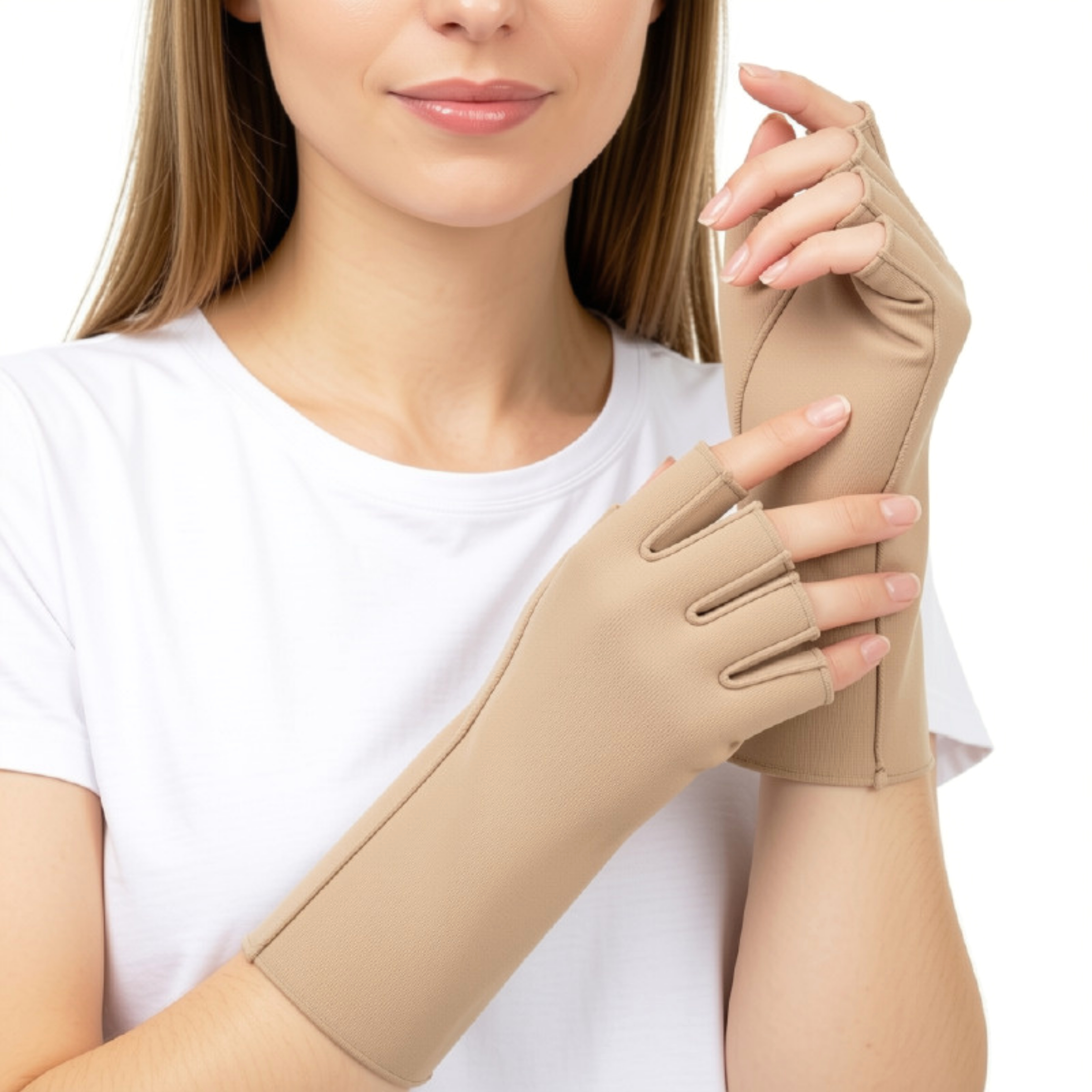
Arthritis Compression Gloves
£11.99
- Fingerless compression gloves for adults with hand pain, stiffness, swelling or weakness.
- Made from a soft, four-way stretch Nylon and Lycra knit.
- Light-to-mid compression helps reduce fluid build-up and ease puffiness.
- Gentle warmth supports the joints and can help with morning stiffness.
- Open fingertips keep your sense of touch for typing, cooking, crafts and dressing.
- Smooth interior with no seams pressing on tender knuckles.
- Reinforced thumb web helps spread pinch force across the palm.
- Extended wrist cuff helps the gloves stay in place during movement.
- Breathable, moisture-wicking fabric helps keep hands dry.
- Wear for an hour or two at first, then build up gradually.
- Should feel snug, not tight; remove if you notice tingling, numbness or skin colour changes.
- Does not replace prescribed treatment; use alongside your care plan.
- Does not treat or prevent blood clots.
- Care: hand wash cold, squeeze gently, lay flat to dry.
Compression Anti-Arthritis Gloves
These fingerless compression gloves are built on established principles of hand mechanics and clinical support. They combine gentle warmth with light-to-mid compression to help reduce swelling, ease morning stiffness, and steady your grip – so you can keep doing the everyday things you enjoy, from typing and cooking to gardening and crafts.
Opening a jar, buttoning a shirt, turning a key in a lock – most of us do these things without giving them a second thought. For many adults with arthritis in their hands, these everyday actions become noticeably harder. The hands are involved in almost everything we do, which is why joint pain, stiffness and swelling in this area can feel so limiting. Over time, many people adjust how they do things, or start avoiding certain tasks altogether. If that sounds familiar, you’re probably looking for reliable support that makes a genuine difference.
What Is Arthritis and Why Your Hands Are Affected
Arthritis is not a single disease. It’s an umbrella term for more than one hundred different conditions that cause inflammation in the joints. The word itself comes from the Greek for “joint” and “inflammation,” which captures the core problem: the joint becomes swollen, painful, and loses its normal range of movement.
Your hands are especially vulnerable because they contain twenty-seven bones and dozens of small joints. Each finger has three joints, and the thumb has two, all working together to give you the fine control needed for everything from writing to fastening a button. That complexity gives your hands remarkable flexibility, but it also means there are many places where the smooth, rubbery tissue that cushions the ends of bones – called cartilage – can wear down, where inflammation can settle, and where the everyday wear and tear of life takes its toll.
The Key Joints in Your Hands
Four groups of joints are most commonly affected by arthritis:
- The distal interphalangeal (DIP) joints are the ones closest to your fingertips. They’re often affected by osteoarthritis, which can lead to small bony growths near the joint, known as Heberden’s nodes.
- The proximal interphalangeal (PIP) joints are the middle joints of your fingers. These can also develop osteoarthritis, sometimes causing similar growths called Bouchard’s nodes.
- The metacarpophalangeal (MCP) joints are the large knuckles at the base of your fingers, where the finger bones meet the palm. These are more commonly linked with rheumatoid arthritis.
- The carpometacarpal (CMC) joint of the thumb sits at the base of the thumb, where it joins the wrist. This is a common site for osteoarthritis and can make gripping and pinching particularly painful.
The Two Main Types of Arthritis
While there are many forms of arthritis, the vast majority of hand arthritis falls into two main categories.
Osteoarthritis – the “wear and tear” type – develops gradually as the protective cartilage at the ends of your bones breaks down. Once that cartilage thins, the bones can rub against each other, causing pain, swelling, and stiffness. Osteoarthritis in the hands often runs in families and is more common in women and as people get older. It tends to affect the base of the thumb and the DIP joints at the fingertips, though it can appear in other joints too.
Inflammatory arthritis includes conditions like rheumatoid arthritis, psoriatic arthritis, and gout. These are autoimmune or metabolic disorders in which the body’s own immune system mistakenly attacks the joints. Inflammatory arthritis often affects the same joints on both sides of the body, and it can cause severe pain, prolonged morning stiffness, swelling, warmth, and over time, visible changes in the shape of the fingers.
There are also related conditions that cause hand discomfort without being classified as arthritis. These include:
- Carpal tunnel syndrome – pressure on the nerve that runs through the wrist, which can cause tingling, numbness, and pain in the fingers.
- Tendinopathy – irritation or inflammation of a tendon, often from overuse.
- Repetitive strain injury – pain that develops from repeated movements, such as typing or using a mouse.
- Raynaud’s phenomenon – a condition where the blood vessels in the fingers overreact to cold, causing the fingers to go numb or change colour.
- General hand swelling – fluid retention that can make the hands feel puffy and stiff.
While these are not technically arthritis, they can all respond well to compression therapy, which is why the gloves may help here too.
Common Symptoms of Hand Arthritis
Arthritis in the hands can show up in a number of ways. Pain or aching in the fingers, knuckles, or wrists is common, especially after using your hands intensively. Stiffness is also very common, particularly first thing in the morning or after a long period of rest. Swelling and tenderness around the joints can make them feel puffy and sore to the touch, and the range of movement often becomes limited – bending or straightening your fingers may feel tight or awkward. Grip weakness is another frequent complaint, making jars, bottles, or doorknobs difficult to manage. Some people describe a grating or grinding sensation when they move their fingers. In more advanced cases, small bony bumps may form near the joints, and the fingers can start to bend slightly out of their usual alignment.
These symptoms can make everyday tasks noticeably more difficult, which is why finding a practical solution matters – not just for comfort, but for maintaining independence and confidence.
The Science of Compression: How It Works
Compression therapy is not a new idea. For decades, healthcare professionals have used compression garments to manage swelling, support blood flow, and support arthritic or injured joints. The principle is straightforward: by applying controlled external pressure to the tissues, you can influence how fluids move through the area, how much space is available around the joint, and how the nervous system picks up information about the position of your hand.
One of the immediate effects of compression is on swelling. When a joint is inflamed, excess fluid seeps into the surrounding soft tissues. This is the puffiness you see and feel. The fluid itself increases pressure in the area, which adds to the discomfort and makes movement stiffer. A compression glove gently squeezes the tissues, which helps push fluid away from the affected area and prevents it from pooling. This reduces oedema – the medical term for fluid build-up – and can lead to a noticeable decrease in puffiness and tension.
Compression also supports normal blood flow. The gentle external pressure helps veins push blood back toward the heart, and it encourages lymphatic fluid – the fluid that carries waste products away from the tissues – to circulate more efficiently. When blood and lymph move freely, more oxygen and nutrients reach the tissues in your hands, which may help them feel less heavy or fatigued.
Warmth is another important element. The glove holds a thin layer of air next to your skin, which helps keep body heat around the joints. This warmth can help reduce muscle tension and ease stiffness, making movement feel smoother. For people whose hands tend to get cold, or those with Raynaud’s phenomenon, this added warmth is especially welcomed.
There is also a neurological component. The pressure of the glove on your skin and joints gives your brain continuous information about where your hands are and how they are moving. This heightened awareness – sometimes called proprioception – helps you move more deliberately and reduces the risk of sudden, jerky movements that could aggravate painful joints. Many people describe it as a sense of support and reassurance as they go about their day.
It is important to be clear: compression gloves are not a replacement for any medication or therapy your doctor has prescribed. They are a complement to your existing care plan – an extra layer of support you can use during your daily routine.
Meet the Gloves – What Sets Them Apart
With that understanding in place, let’s look at what these Compression Anti-Arthritis Gloves actually do. Every design detail has been chosen with hand function in mind.
The gloves provide light-to-mid compression, which means the pressure is firm enough to ease puffiness, reduce stiffness, and steady your grip, but not so tight that it restricts blood flow or becomes uncomfortable. The exact level depends on the size you choose. A correctly fitted glove should feel snug and supportive – never painful. If your fingertips tingle, your fingers feel numb, or your skin changes colour, the gloves are too tight and a larger size is needed.
The fingerless design is intentional. By leaving the fingertips free, you keep full sensitivity in your fingers, so you can feel a coin, a keyboard key, or a needle without any barrier. That makes buttoning a shirt, tying shoes, or picking up small objects much easier than with full-finger gloves. Open fingertips also help your hands stay cooler and allow moisture to escape.
Inside, the gloves are smooth. All the seams are placed on the outside, so the interior is free of ridges that might press into tender knuckles or swollen finger joints. This is particularly helpful when the gloves are worn for several hours at a time.
The reinforced thumb web is another important feature. The area of fabric between your thumb and index finger is called the thumb web, and it is here that much of the force from pinching and gripping is concentrated. The reinforced material in this area helps spread that force more broadly across your palm, which takes pressure off the joint at the base of the thumb – a common source of arthritis pain.
The gloves are shaped to follow the natural resting position of your hand. When you’re not actively gripping something, your fingers can sit in a relaxed, slightly curved posture rather than being flattened or forced into an unnatural position. This shape helps reduce strain on the joints while still allowing full movement.
An extended wrist cuff keeps the gloves securely in place as you move. The cuff is gentle and non-restrictive, so it won’t dig in or interfere with your wrist movement, but it does prevent the glove from sliding down during activities like gardening or typing.
The fabric itself is a soft, four-way stretch knit of Nylon and Lycra. It is breathable and moisture-wicking, meaning it draws sweat away from your skin so your hands stay dry and comfortable even during longer wear. It also holds warmth effectively without feeling heavy, and it returns to its original shape after repeated use, so the compression stays consistent. On cold days, you can layer these gloves under a pair of thermal mittens for extra warmth, and they still work.
Finally, they are built to last. The stress points – the cuff and the areas between the fingers – are double-stitched for extra strength, so they can cope with the daily demands of cooking, cleaning, typing, and gardening. To look after them, wash them by hand in cold water with a mild soap, gently squeeze out the excess water (never wring), and lay them flat to dry. Avoid harsh detergents and tumble drying, and they’ll keep their shape and compression well.
Who These Gloves Are For
These gloves are designed for anyone who experiences pain, stiffness, swelling, or weakness in their hands. Although they are made with arthritis in mind, their benefits extend to a wider range of situations.
People with hand osteoarthritis – the wear-and-tear type – often find them helpful, whether the pain is in the fingers, the base of the thumb, or both. The gloves provide steady compression and warmth that can ease stiffness and reduce discomfort during daily tasks.
People with inflammatory arthritis, such as rheumatoid arthritis or psoriatic arthritis, may also benefit, provided this is done under the guidance of a healthcare professional. The gentle pressure can help reduce swelling and support the joints, but it should be used alongside prescribed treatment.
People with general hand swelling, or oedema, can use the gloves to help discourage fluid from pooling in the tissues. This can be helpful after surgery or when overuse has left the hands feeling puffy.
People with cold-sensitive hands or Raynaud’s phenomenon often appreciate the warmth the gloves retain. By keeping the hands at a more even temperature, the gloves can help reduce the discomfort that comes with cold exposure.
People with mild tendinopathy around the wrist or thumb base, such as De Quervain’s tenosynovitis – a condition where the tendons on the thumb side of the wrist become irritated and painful – may also find relief from the compression and warmth.
People who experience overuse or repetitive-strain discomfort – from typing, playing an instrument, or working with their hands all day – often find that the gloves reduce fatigue and help their hands feel less tight by the end of the day.
People with mild hand hypermobility – unusually flexible or loose joints – may benefit from the extra sense of stability the gloves provide. The gentle pressure gives the joints more support, reducing the feeling that the fingers might over-bend.
If you are unsure whether these gloves are right for you, it’s worth speaking to a doctor, physiotherapist, or occupational therapist. They can help you decide whether compression therapy fits into your wider treatment approach.
You don’t need a formal diagnosis to try these gloves. People who spend long hours typing often find the gloves help prevent the cramping that builds up by the end of the day. The same applies to hobbies such as gardening, knitting, painting, or fishing – the added support can make it easier to keep enjoying them for longer.
How to Choose the Right Fit and Wear Them Correctly
Getting the right size is essential. A glove that is too loose won’t provide enough support, while one that is too tight can cause tingling or discomfort. Fortunately, measuring is simple.
Measuring Your Hand
Wrap a soft measuring tape around the widest part of your hand, just below your knuckles. The tape should be snug against your skin, but not pressing into it. Take that measurement in centimetres or inches and compare it with the size chart provided for the product. The chart offers unisex S, M, and L sizes.
If your measurement falls between two sizes, think about the level of compression you want. A smaller size gives a firmer, more supportive feel; a larger size feels more relaxed. In either case, the glove should never cause numbness, tingling, or changes in skin colour. If it does, take it off and try a size up.
When to Wear the Gloves
When to wear the gloves is largely up to you. Many people find them most useful at times when their hands tend to be stiff and uncomfortable. That might be first thing in the morning, when the hands are often stiffest after a night of rest. You might also want to wear them during activities that place a lot of demand on your hands, such as typing, cooking, cleaning, or gardening. If your hands tend to swell as the day goes on, putting them on in the evening can help bring down puffiness and soothe aching joints. Some people also wear them overnight, which can help with morning stiffness. If you choose to do that, make sure the fit is comfortable and not too tight.
How Long to Wear Them
There is no set rule for how long to wear them each day. Some people use them for a few hours during particular activities; others wear them almost continuously. If you’re new to compression gloves, start with one or two hours at a time and gradually build up as your hands get used to the sensation. Pay attention to how your hands feel. If they feel better with the gloves on, you can wear them longer. If they feel constricted or uncomfortable, give yourself a break and try again later.
How to Get the Best From These Gloves
It’s important to have realistic expectations. Compression gloves are not a cure for arthritis. They are a support tool – one that works gradually and consistently. Some people notice a difference within the first few days, while others may need a couple of weeks of regular wear before the benefits become clear. This varies depending on the type and severity of the symptoms, and how consistently the gloves are worn.
You should not feel any tingling, numbness, or pain from the gloves themselves. If you do, remove them and try a larger size. It may take a few attempts to find the right fit, but it’s worth getting it right. A well-fitted glove should feel snug and supportive, without any tingling or numbing.
Wearing the gloves regularly is more effective than wearing them occasionally. If they are only put on for a few minutes here and there, meaningful change is less likely. Try to build them into your daily routine – during work, hobbies, or rest – and give your hands a chance to adapt.
The gloves are designed to be worn during activities that put strain on your hands, but they can also be worn at rest. The right pattern depends on your symptoms. If your hands feel better with the gloves on, wear them longer. If they feel constricted, take a break and try again later.
Because these gloves apply gentle pressure and support blood flow, they are not designed to treat or prevent blood clots and must not be relied on for that purpose. If you have any concerns about blood clots, circulation, or new symptoms that don’t settle, speak to a GP before using compression gloves.
The 30-Day Money-Back Guarantee
Many people have tried creams, supplements, or devices that didn’t live up to expectations. That’s why these gloves come with a full 30-day money-back guarantee.
Try them in your own home, during your own daily activities. Feel the fabric, test the fit, and see for yourself whether they make a difference. If, for any reason, you’re not completely satisfied, return them in their original condition within 30 days of receiving them, and the purchase price will be refunded. There is no risk in trying them. The only way to know if they work for you is to try them.
Take Care of Your Hands Today
Your hands are involved in almost everything you do – at work, at home, and during the activities you enjoy. When arthritis makes those tasks more difficult, practical support becomes important.
Arthritis can be a long-term condition, but constant pain doesn’t have to be your daily reality. With the right knowledge and the right tools, you can reduce your symptoms and keep doing the things that matter to you. These Compression Anti-Arthritis Gloves provide gentle, reliable support that you can wear while you go about your day. They help reduce swelling, ease stiffness, steady your grip, and give you the confidence to keep moving.
Choosing the right size is simple. Decide whether you prefer a firmer or more relaxed fit, put them on during the tasks you do most, and see how your hands respond. If they’re not everything we promised, you’re covered by the 30-day guarantee.
If you’re looking for practical support for painful, stiff hands, these gloves offer a gentle, supportive option that you can start using today.
Important Health Information
This information is general guidance and is not a substitute for individual medical advice, diagnosis, or treatment. Compression gloves are not a cure for arthritis and they do not treat or prevent blood clots. If you have new or unexplained symptoms, any concerns about your circulation, or more complex health needs, speak to a GP, physiotherapist, or occupational therapist before using compression gloves. Individual results vary, and no guaranteed outcomes are implied.
| Material | A blend of Nylon & Lycra |
|---|---|
| Color | Beige |
| Size | Medium, Large, Extra Large |
| Washing Instructions | Machine washable on a low temperature – However, to maintain the gloves for longer it is advised to hand wash the gloves in warm soapy water and leave to dry on a washing line |
| Age Range | Adults |
| Use for | Can be worn to help treat, prevent and ease symptoms commonly associated with Arthritis, Raynaud's disease, Repetitive strain injuries and Carpal tunnel syndrome – Wearing these gloves can also help to improve hand function and prevent wear and tear to the the joints and ligaments in your hands and fingers |
| Overview | As you sit at your computer, typing away at the keyboard, do you ever feel a deep-seated ache in your hands and fingers? Do you suffer from Rheumatoid Arthritis, Osteoarthritis, or any other hand-related ailments? If so, the Compression Anti-Arthritis Gloves may be just what you need. Made from a combination of soft Nylon and Lycra fabric, these gloves are stretchy, breathable, and designed to wick away moisture, keeping your hands feeling comfortable and fresh all day long. But these gloves are more than just comfortable; they are also designed to target and relieve aches and pains in your hands and fingers. Studies have shown that compression therapy can help alleviate symptoms of arthritis, reduce inflammation and swelling, and stimulate blood vessels to improve circulation. The Compression Anti-Arthritis Gloves do all of this and more. They offer support to your hands and fingers, improve their function, and minimize strain and pressure to prevent muscle fatigue and injury. But these gloves are not just for those with arthritis. They are perfect for anyone who spends long hours typing on a computer, as they prevent their hands and fingers from cramping up. And with different sizes available, they are suitable for both men and women. So why not give these gloves a try? With a 30-day money-back guarantee, you have nothing to lose. Don't let hand pain and discomfort hold you back any longer. Order your Compression Anti-Arthritis Gloves today and feel the difference for yourself. |
You must be logged in to post a review.
Delivery information
Here at Revitafit we use Royal Mail to deliver all of our orders first class. This means you can rest assured that your items will arrive as fast and safely as possible.
We also believe that delivery costs should be as affordable as possible, so we offer a flat rate postage and packaging fee of just £2.99. This means that no matter how many things you order, you won't be charged extra for delivery.
To get your order to you as quickly as possible we dispatch all orders made before 5pm on working days the same day. If you order after 5pm or on a weekend, don't worry - we'll dispatch your order the next working day.
Not received your order? Sometimes things can go wrong, and orders can get lost or delayed in the post. If this happens to you, please don't hesitate to get in touch with us. We're always here to help, and we'll do everything we can to resolve the issue and get your order to you as soon as possible.
How to return and Item
At RevitaFit, we understand that sometimes things just don't work out. That's why we offer a hassle-free 30 day return policy. We want our customers to be completely satisfied with their purchases, so if for any reason you are not happy with your product, you can return it within 30 days for a full refund.
To ensure a smooth and easy return process, please make sure that the item is in its original condition and packaging. We cannot accept returns for items that have been used or damaged. The customer is responsible for the cost of returning the item, but if the product was faulty or damaged upon arrival, we will cover the postage and packaging costs.
If you simply ordered the wrong size, no need to worry. We will happily exchange the item for the correct size free of charge.
Please note that returning an item does not affect your rights as a consumer. If you have any questions or concerns about our returns policy, please do not hesitate to contact us.
To initiate a return, please send your item along with a note containing your order number to our address: RevitaFit UK, 81 Highfield Lane, Waverley, Rotherham, S60 8AL. We will process your return as soon as possible and issue your refund within 7-10 business days.
 Arthritis Compression Gloves
 £11.99
Reviews
There are no reviews yet.